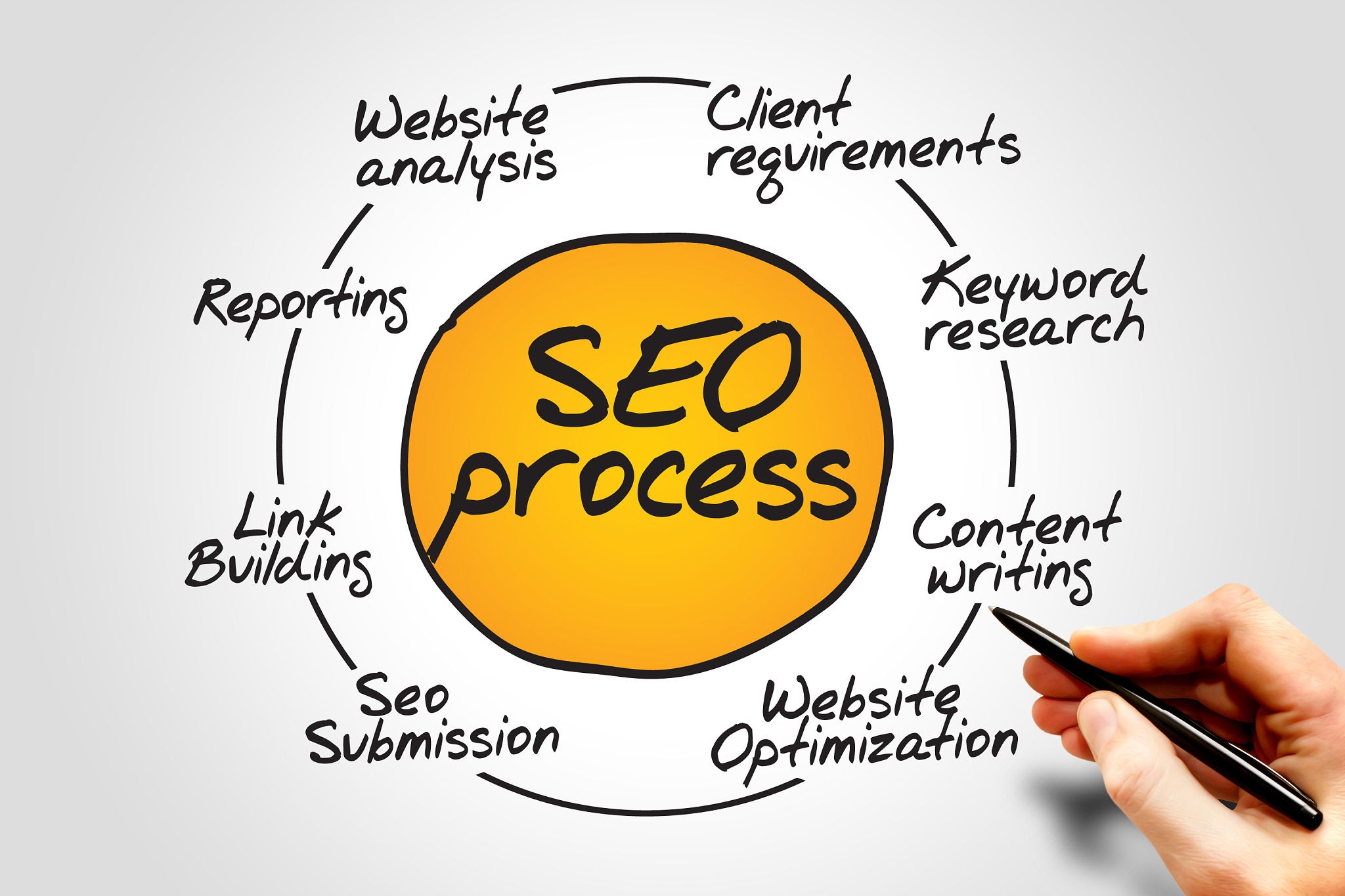
10 SEO Components You Need for 2026 Google Rankings
Stop guessing what Google wants. Learn the 10 essential SEO components required to secure higher rankings in 2026 and turn organic traffic into growth.
Essential SEO components represent the exact foundational building blocks determining search engine ranking outcomes. These critical elements encompass strategic, technical, content-driven, and user-focused variables.
Search algorithms consistently evaluate these interconnected components to precisely measure website relevance, domain authority, and usability within organic search results.
The hypernym of essential SEO components encompasses total algorithmic visibility frameworks. Search engine algorithms function strictly as data extraction and evaluation systems.
These systems process specific hyponyms, such as on-page optimization protocols, technical site architecture configurations, and off-page trust signals. Webmasters manipulate these structural variables to force deterministic ranking outcomes across target queries.
The digital ecosystem operates entirely on mathematical correlations between user intent metrics and indexable website assets. Search engines measure these correlations to organize global information efficiently.
Entity-Attribute-Value (EAV) relationships define this entire optimization framework for machine parsing. The Entity [Search Engine Optimization] possesses the Attribute [Component Integration], which delivers the Value [Organic Search Dominance]. Masterful execution of these components forces search indexers to categorize domains as industry authorities.
| Semantic Entity | Core Attribute | Algorithmic Value |
|---|---|---|
| Essential SEO Components | Primary Function | Algorithmic Relevance Scoring |
| Essential SEO Components | Hypernym Classification | Algorithmic Visibility Frameworks |
| Essential SEO Components | Core Hyponyms | Technical, Content, Authority Variables |
| Essential SEO Components | Measurement System | Search Engine Result Pages (SERPs) |
How Does Audience Intent Define Search Engine Optimization Components?
Target audience comprehension initiates the entire search engine optimization lifecycle. Search algorithms interpret user behavior and underlying intent, categorizing queries as informational, transactional, or navigational. Analyzing competitor strategies and user needs generates search-aligned content that satisfies specific algorithmic demand efficiently.
Search engines process semantic entities that map directly to human search behaviors. Competitor strategies dictate the baseline algorithmic requirements for specific topical clusters.
Marketers extract user concerns from historical query logs to align page content directly with precise searcher expectations. This exact alignment guarantees maximum relevancy scoring from the search engine. Without intent alignment, optimization components fail to generate sustainable organic traffic.
What Are the Methods to Analyze Target Audiences?
Precise audience segmentation mandates the evaluation of search query volumes and explicit user behaviors. Marketers execute rigorous competitive analysis to extract ranking strategies from top-performing domains. Isolating specific user concerns directly informs subsequent content creation and necessary topical coverage expansions.
Defining audience segments limits wasted server crawl budgets on irrelevant keyword targeting. Content generation requires exact alignment with verified audience pain points. The Entity [Audience Analysis] features the Attribute [Competitor Tracking], generating the Value [Strategic Content Alignment].
- Define exact audience segments utilizing demographic and behavioral data metrics.
- Analyze top-ranking competitor content to reverse-engineer successful domain structures.
- Extract recurring user queries to execute localized and global content expansion.
What Is the Role of Keyword Research in SEO Content Structure?
Keyword research consistently identifies exact semantic intent behind search queries. Search engines strictly prioritize content directly matching specific user goals.
Optimizing targeted pages around primary keywords and associated semantic variations inherently fulfills algorithmic requirements, ensuring web pages satisfy exact information extraction needs.
Keyword research isolates the mathematical frequency of specific search terms within global databases. Google systems match the lexical footprint of a user query directly against the indexed document database.
Uncovering user intent dictates whether the target URL requires informational prose, transactional product arrays, or specific navigational signposts.
Precise keyword targeting forces the web page to intersect with active search demand. The Entity [Keyword Research] uses the Attribute [Search Volume Data] to provide the Value [Targeted Traffic Acquisition].
How Do Semantic Variations Enhance SEO Main Components?
Semantic variations establish comprehensive topical relevance within indexed databases. Integrating related terms prevents keyword stuffing penalties while signaling exhaustive subject mastery.
Algorithms parse these contextual clues to map the core entity against broader knowledge graphs, elevating exact keyword ranking precision.
Incorporating related keywords establishes the meronyms of the primary target topic. Search bots recognize these secondary semantic connections, validating the total depth of the core entity. This technical approach maximizes the total indexable surface area of a single URL.
Why Do Main Components of SEO Require High-Quality Content?
High-quality content directly serves user search objectives by answering queries accurately and comprehensively. Superior information depth increases page dwell time and explicitly reduces bounce rates. Search algorithms evaluate this relevance, rewarding satisfying, original articles with elevated domain trust and visibility.
Content operates as the primary vector for data transmission between a web domain and a search engine algorithm. Algorithms deploy complex natural language processing models to evaluate document accuracy and structural comprehensiveness.
Quality guarantees the absolute fulfillment of the user's initial search query. This fulfillment signals successful entity resolution to the search engine. Algorithms interpret this resolution as a positive quality score. The Entity [Digital Content] applies the Attribute [Information Depth] to secure the Value [Algorithm Trust].
How Does Content Depth Affect Algorithmic Evaluation?
Comprehensive topic coverage directly signals domain authority to evaluation systems. Updating legacy articles maintains systemic relevance, explicitly preventing content decay. Original, well-researched paragraphs satisfy user query demands, forcefully extending session dwell times while simultaneously collapsing domain-wide user bounce metrics.
Writing original, in-depth articles builds topical authority within highly specific industry niches. Webmasters continually update older content to refresh temporal relevance markers embedded in the page code. Semantic phrases deployed naturally across the text body map the content directly to Google's Knowledge Vault.
| Content Entity Focus | Primary Structural Attribute | Target Algorithmic Value |
|---|---|---|
| Informational Articles | Topical Comprehensiveness | Increased Session Dwell Time |
| Transactional Pages | Exact Intent Alignment | Elevated Conversion Rates |
| Legacy Documents | Information Recency | Maintained Ranking Position |
How Do On-Page SEO Components Dictate Technical Structure?
On-page optimization merges content strategy with exact technical execution. Structural signals like optimized title tags, header hierarchies, meta descriptions, and descriptive image alt text guide search indexers. Proper internal architecture dictates topic comprehension, enabling flawless algorithmic interpretation of web elements.
On-page signals translate human-readable content into strictly machine-readable data nodes. Title tags serve as the primary lexical identifier for document indexing operations.
Webmasters deploy structured markup schema to explicitly define document data types. This explicit definition forces the generation of rich search results. Every internal element requires precise configuration to satisfy indexer protocols. The Entity [On-Page Optimization] utilizes the Attribute [Meta Data Configuration] to output the Value [Flawless Indexation].
What Are the Meronyms of On Page SEO Components?
Core internal structural elements include optimized title tags, descriptive meta descriptions, and distinct header hierarchies. Webmasters assign explicit keyword targets to individual URLs. Deploying descriptive image alt text ensures crawler accessibility, establishing a rigidly organized framework for algorithmic indexing.
Unique title tags prevent algorithmic duplicate content penalties across massive site architectures. H1 and H2 headers build a strict logical hierarchy, systematically segmenting text blocks into consumable data chunks. Descriptive URLs provide immediate contextual mapping for search crawlers before full HTML rendering initiates.
- Assign unique, intent-optimized title tags and meta descriptions to every indexable URL.
- Implement explicit HTML header hierarchies (H1 through H6) to strictly group semantic concepts.
- Format all image alt text to describe visual assets accurately for accessibility algorithms.
What Are the Mobile-First SEO Key Components?
Google search systems execute mobile-first indexing, processing mobile site iterations before desktop equivalents. Mobile usability operates as a primary algorithmic ranking factor. Websites demanding visibility mandate responsive design frameworks, touch-friendly navigation components, and compressed visual layouts for optimal performance metrics.
Desktop HTML configurations no longer dictate baseline ranking scores. Google exclusively utilizes the mobile version of the HTML document for all indexation and evaluation tasks.
Sites failing objective mobile usability thresholds face immediate algorithmic suppression, regardless of accumulated link equity or document quality. The indexing systems prioritize lightweight, fluid interfaces. The Entity [Mobile Website] features the Attribute [Responsive Design] delivering the Value [Mobile-First Compliance].
How Do Responsive Frameworks Influence Mobile Search Visibility?
Responsive web design automatically scales digital assets across distinct device resolutions. Touch-friendly navigation elements prevent user interface friction on cellular hardware. Optimizing mobile layouts explicitly satisfies primary indexing requirements, directly preventing systemic ranking demotions initiated by algorithmic usability filters.
Device fragmentation requires fluid CSS grid layouts. Optimized images physically reduce mobile bandwidth consumption, actively preventing fatal server load delays. Integrating touch-friendly graphical elements explicitly removes structural navigation barriers, mathematically optimizing the complete mobile user journey.
How Does Crawlability Affect Technical SEO Components?
Technical crawlability ensures search engine bots physically access, interpret, and index website directories. Configurations within XML sitemaps and robots.txt files manage bot flow. Eliminating specific crawl errors and deploying precise canonical tags solidifies site architecture, maximizing indexing efficiency and rendering.
Server configurations explicitly dictate search bot access permissions. The robots.txt protocol explicitly blocks crawlers from parsing low-value administrative directories, preserving crawl budgets.
XML sitemaps provide a completely deterministic roadmap of priority URLs, eliminating the need for inefficient discovery crawling. Clean architecture reduces the physical crawl distance between the root domain URL and terminal pages. The Entity [Technical Crawlability] implements the Attribute [XML Sitemap Deployment] to force the Value [Efficient Bot Indexing].
What Tools Facilitate Technical Indexing Diagnostics?
Webmasters deploy search console applications to aggressively monitor server crawl frequencies. Generating properly formatted XML sitemaps directs bots toward priority URLs. Analyzing server error logs isolates broken redirect chains, permitting rapid deployment of restorative patches to stabilize overall site architecture.
Deploying canonical tags explicitly terminates duplicate content issues generated by dynamic URL tracking parameters. These technical SEO components guarantee complete, uninterrupted bot saturation across the entire domain architecture.
Why Is Site Speed Categorized Under SEO Web Components?
Site speed metrics heavily influence algorithmic search ranking calculations. Core Web Vitals objectively measure loading performance, page interactivity, and visual stability. Implementing image compression, server caching protocols, and script minimization explicitly accelerates load times, directly increasing total user session durations.
Millisecond server delays permanently destroy page conversion rates and user retention metrics. Algorithms measure page speed objectively using collected field data from live browser deployments. Fast load times explicitly reduce the physical server cost of web crawling.
This efficiency incentivizes search engines to allocate substantially higher crawl budgets to the optimized domain. The Entity [Site Speed] requires the Attribute [Optimized Hosting] to produce the Value [Accelerated Server Response].
How Do Core Web Vitals Measure Page Loading?
Largest Contentful Paint measures render times for primary visual assets. First Input Delay quantifies explicit browser interaction latencies. Cumulative Layout Shift monitors exact frame stability during load sequences. Optimizing these three metrics forcefully aligns domains with strict speed evaluation algorithms.
Hardware limitations on mobile cellular networks amplify document load delays. Minimizing JavaScript execution times prevents active browser thread locking. Webmasters utilize optimized server caching environments to permanently reduce physical server response latencies.
| Web Vitals Metric Entity | Evaluated Technical Attribute | Applied Optimization Tactic |
|---|---|---|
| Largest Contentful Paint | Visual Asset Render Speed | Explicit Image Compression & Preloading |
| First Input Delay | Browser Interaction Latency | Aggressive JavaScript Minimization |
| Cumulative Layout Shift | HTML Frame Visual Stability | Explicit CSS Element Sizing |
How Do Off Page SEO Components Establish Domain Authority?
Off-page optimization depends strictly on external, high-quality backlinks acting as digital credibility endorsements. Search algorithms interpret inbound links from reputable domains as quantitative trust signals. A structurally sound backlink profile aggressively scales domain authority, cementing total overall search visibility dominance.
External domain links function as the exact hypernym for algorithmic trust metrics. Without structured off-page SEO components, domains completely lack the external validation mathematically required to rank for highly competitive, commercial search queries.
Inbound link quality supersedes link quantity absolutely. A singular link from a highly trusted industry hub transmits significantly more ranking equity than thousands of low-tier directory submissions. The Entity [Domain Authority] depends on the Attribute [High-Quality Backlinks] to generate the Value [Topical Trust].
How Does Backlink Quality Override Quantity Metrics?
Search algorithms aggressively devalue massive link volumes originating from low-trust domains. Securing single inbound links from highly authoritative industry websites mathematically outperforms hundreds of spam citations. Regular profile monitoring and explicit disavowal procedures continuously protect domains from algorithmic link penalties.
Developing highly authoritative internal content naturally attracts high-value inbound links. Active outreach campaigns target relevant industry publications to intentionally secure external domain citations. Search engineers specifically design link evaluation algorithms to actively detect and penalize artificial link velocity, making natural acquisition patterns strictly mandatory.
What Role Do User Experience Components for Search Engine Ranking Play?
Engagement metrics quantify user satisfaction levels directly for search evaluators. Bounce rates, session durations, and overall click-through data form exact performance signals. Intuitive website navigation and explicit visual hierarchies minimize user friction, forcefully generating prolonged page interactions and algorithmic rewards.
User experience transcends pure visual graphic design; it mathematically dictates user interaction flow. Confusing website navigation generates immediate session bounces, immediately transmitting negative quality signals back to the search engine index.
Intuitive, fast-loading interfaces successfully retain users, effectively validating the algorithm's initial search ranking assignment. The Entity [User Experience] modifies the Attribute [Interface Usability] to produce the Value [Prolonged Session Engagement].
How Do Interaction Signals Inform Algorithmic Adjustments?
Low bounce rates verify exact user query fulfillment to search indexers. Extended session durations substantiate information relevance and depth. Generating clear visual hierarchies and executing frequent usability testing protocols mathematically isolates conversion friction, driving continuous enhancements to website interaction flows.
Algorithms objectively assess the physical layout configuration of the HTML page. Strict readability standards and defined visual hierarchies force the user's optical path toward primary content blocks. Usability testing produces empirical interaction data, allowing webmasters to methodically eliminate specific design elements that mathematically cause user abandonment.
How Does Analytics Drive Continuous Search Engine Optimization Components?
Continuous optimization relies entirely on factual analytics data tracking organic traffic, keyword ranking positions, and exact conversion rates. Monitoring performance via Google Search Console establishes a rigorous, data-driven feedback loop. Webmasters isolate underperforming components and rapidly deploy required structural modifications.
Algorithmic parameters constantly shift, demanding real-time technical adaptation. Analytics dashboards provide the deterministic mathematical baseline for all strategic architectural modifications.
Without concrete, verifiable data reporting, search engine optimization devolves into pure speculation, rapidly destroying long-term ranking stability. The Entity [Analytics Reporting] utilizes the Attribute [Performance Tracking] to deliver the Value [Strategic Agility].
What Performance Metrics Establish SEO Key Components Validation?
Traffic volume analysis defines exact audience acquisition success rates. Keyword position tracking validates the functional efficacy of deployed content strategies. Monitoring precise conversion events links optimization efforts directly to verifiable business growth, forcing continuous iteration based on factual performance outputs.
Tracking core key performance indicators such as organic session totals, page bounce rates, and lead generation events—proves the exact return on investment for structural SEO modifications. Webmasters parse monthly data reports to instantly identify decaying document content, shifting keyword intent signals, and emerging technical server errors.
- Deploy Google Analytics and Search Console tracking codes explicitly across all domain URLs.
- Define specific Key Performance Indicators (KPIs) mapping directly to direct revenue generation events.
- Execute rigid monthly data reviews to mechanically adjust content and technical variables against live tracking data.